The Rent-Free Tenants: Or, What Would You Like to Read?

In which I ask the small and very select readership of this blog a question, and promise a poll, technology permitting.

I have a confession to make, and it’s not a surprising one to anyone who’s met me. There are a great many things living in my head, and almost none of them pay rent.

They don’t do the dishes either. They leave the lights on at three in the morning, they bring friends over without asking, and every so often one of them stands in the middle of the room and demands to be written about. I’ve been a terrible landlord for years. I’ve just let them all stay.

So it occurs to me that the sensible thing (and I’m aware “sensible” is a stretch around here) would be to ask you which of them you’d actually like to hear from.

I know there aren’t many of you. I can probably picture most of your faces. But that’s rather the charm of it, isn’t it? This is less a blog and more a long conversation over the back fence, and it seems only polite to ask the people on the other side of the fence what they’d like to talk about.

The candidates

Here, in no particular order, are the tenants currently jostling for a room of their own on Stationhouse Notebook.

  1. The farmstead. Progress reports from our semi-rural patch and the market garden we’re slowly coaxing out of it. The llamas. The Highland bull and the sheep who is hopelessly, embarrassingly in love with him. The geese, who believe they own the place, and who may well be right. What grew, what didn’t, and what the possums got first.
  2. The cats. I’m qualified to speak on this one in the way that a person who has never once won an argument with a cat is qualified. There are a lot of them. They all have opinions. Some of them have left home and walked twenty-five kilometres back again, which tells you something about either their loyalty or the quality of the biscuits.
  3. The writing, and the six people in my head. I write under a handful of names, and each of them is, frankly, her own woman. One writes hockey boys with marshmallow centres. One writes soldiers and their secrets. One writes fae courts. One writes murder in a little Tasmanian town. They don’t always get along, and they absolutely all want the good chair. I could introduce you to them properly, one at a time, and tell you how the books actually get made.
  4. Semi-rural life in Tasmania. Living in an old police station in the shadow of the Western Tiers. The weather, which deserves its own blog. The neighbours, the roads, the wildlife on the roads, and what it’s actually like out here once the tourist brochures go home.
  5. Our wobbly journey towards sustainability. Not the glossy, everything-made-of-bamboo version. The real one, with the mistakes left in. What we’re trying, what’s working, and what we’ve had to quietly abandon behind the shed.
  6. The Halloween shenanigans. I want to be clear that I’m not calling this “decorating”. Decorating implies restraint, a colour scheme, and a person who knows when to stop. What happens here every October is shenanigans, pure and simple. This year there’s a theme, and the theme is water. Everybody is a skeleton. There’s a skeleton paddling a canoe, a skeleton having a shower, a skeleton lounging in a pool, and more where they came from. I’m prepared to document every one of them, and every questionable decision that got them there.
  7. Something else entirely. Hockey, perhaps (you’ve been warned). The mobile bookshop. Books I’ve loved. Whatever you’re curious about. If there’s something you’ve always wanted to ask me, here’s your chance.

Or, the cheat’s answer

Of course, you might say “all of it, please, just mix it up,” which is what I’d say in your shoes and is also, if I’m honest, what’s going to happen anyway. Nothing in my life stays in its own lane. A post about the vegetable garden will turn into a post about a cat sitting in the vegetable garden, which will turn into a scene in a book. That’s just how the house works.

But I’d still love to know what makes you lean in. What’s the bit you’d come back for?

About this poll

I’d like to put this to a proper vote. I say “I’d like to” because control of technological matters is not, regrettably, one of the things living rent-free in my head. It’s more of a short-term guest that keeps losing its key.

So, if I can work out how to do it, there’ll be a poll right here. If I can’t, there won’t be, and you’ll have to tell me in the comments like it’s 2009. Either way works for me. I just want to hear from you.

Pick one, pick several, or tell me I’ve missed the obvious. I’m all ears. And so, I suspect, are the cats.

From the Stationhouse, with the kettle on x

Sheds, a Smut Hut and the Great Shuffle

Big news from the stationhouse, and for once it isn’t about a cat turning up after a mysterious absence or a goose holding a grudge.

The sheds are finished.

I’ll give you a moment. I needed a few myself.

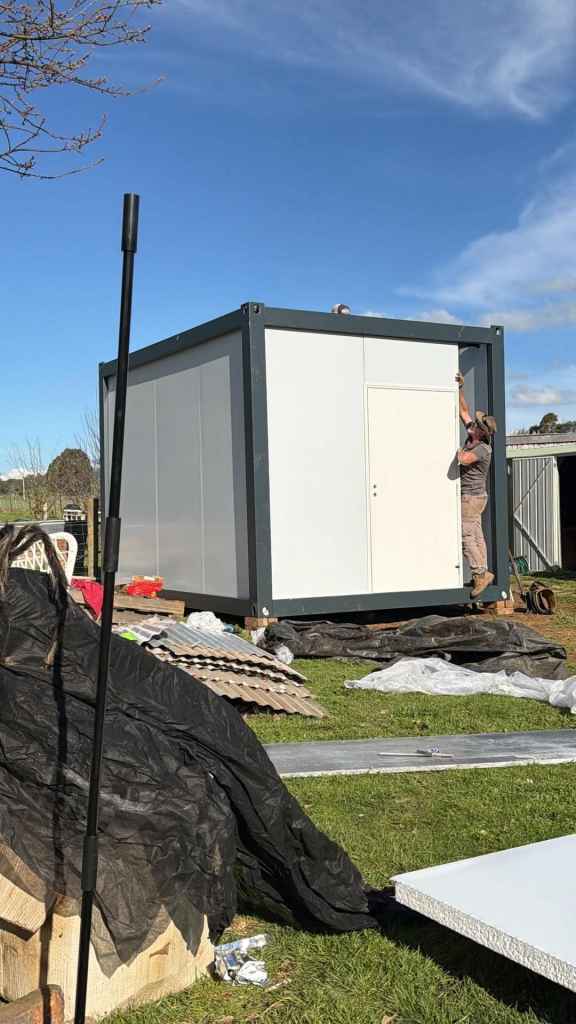
For those of you who haven’t been following the saga (lucky you), there has been building going on out the back for what feels like most of my natural life. Tradies, deliveries, mud, more mud, a lot of standing in the yard with a cup of tea looking at things and nodding as though I understood them. The guinea fowl supervised. Loudly. Constantly. With a running commentary nobody asked for. If you’ve never had a building project overseen by guinea fowl, imagine a team of very small, very shrill site managers who disapprove of everything and say so at a volume usually reserved for fire alarms.

But it’s done. Actually done. Walls, roof, doors that open and, more importantly, doors that shut.

Which means I am now the proud owner of a Smut Hut.

Yes, that’s what I’m calling it. No, I won’t be taking suggestions. When you write as many kissing books as I do, under as many names as I do, you earn the right to a room of your own with a slightly scandalous name. Virginia Woolf asked for a room of one’s own. She just didn’t think to name it properly.

It’s my writing space. And my podcasting space. And my blogging space. Basically, it’s where all the words live now, whether they’re being typed, recorded or rambled into a microphone. A door I can close. A desk that isn’t the board across my lap, where I won’t have to shift a manuscript every time someone wants to eat dinner like a civilised person. Somewhere the hockey boys and the soldiers and the fae and the country coppers can all live together in glorious chaos without spilling into the rest of the house. (They will spill anyway. They always do. But the theory is lovely.)

And Jo’s sewing room is finished too. A proper one, with room to spread out, room for fabric, room for all the bits and bobs that turn into the beautiful bookish things she makes. No more packing everything away at the end of the day. No more finding pins in places pins should never be. I am excited for her. I am also quietly excited for her bed, which may finally be pin-free.

Here’s the catch, though. Finished doesn’t mean ready. Right now we have two lovely, clean, empty rooms and a house that is still absolutely full of everything that’s supposed to go in them.

So, for the next little while, life here is going to be one long game of shuffle. Shifting things. Setting up. Moving in. Carrying boxes from one end of the property to the other and then, inevitably, carrying half of them back again because we put them in the wrong place. Deciding where the bookshelves go. Then deciding again. Then deciding a third time, because the light is different in the afternoon and I have Opinions about where the sun should fall on my desk.

And because the universe has a sense of timing, the shipping container has arrived as well.

I know a container isn’t glamorous. Nobody’s writing romance novels about a big steel box parked out the back. (Yet. Give me time.) But for us it’s a small miracle, because it means storage. Real storage. The kind where the things you aren’t using right now can go and live somewhere that isn’t the spare room, the hallway, the corner of the lounge or that one chair that stopped being a chair years ago and became a shelf.

Which means, for the first time in a long time, we might actually be able to declutter the house. Not completely. Let’s not get carried away. This is still a stationhouse with a lot of cats, a lot of books and three women who have never met a box they didn’t want to keep. But a little. Enough to see some floor. Enough to put a cup of tea down without moving three things first.

The cats, I should say, have views. The cats are not allowed in the sheds. This is non-negotiable. The sheds are verboten. Fifteen-odd cats have been informed of this policy and, as a group, have chosen to see it as more of a suggestion. I fully expect to spend the next month shooing someone away from the Smut Hut door, and recording a microphone while a very offended face stares at me through the window. They can have the whole house. They have always had the whole house. The sheds are ours.

So that’s where we are. Lots of lifting. Lots of sorting. Lots of standing in doorways going, “Now where did I put…?” And underneath all of it, a feeling I wasn’t quite expecting: that this place is slowly, finally, turning into exactly what we hoped it would be.

Two rooms built for making things. A home with a bit more breathing space. And a very long list of boxes.

Wish us luck. Send biscuits.

Elvis has left the Concert Hall

Or: Service Station Sandwiches, Ninety Stairs and an Aldi Grail Quest

First, a confession. If you’ve been waiting on tenterhooks for my last post about the Spirit and her glorious showers, it turns out my phone decided to publish it as a draft. As a draft. It sat there, finished and polished and visible to precisely no one, while I went about my week believing I’d shared my thoughts with the world. So if it pops up now, that’s why. Technology, like the Strait, does what it wants.

Anyway. The drive up was fine. Eighteen hours is eighteen hours, and there’s not much you can do to dress it up, but we did our best with an endless parade of service station sandwiches. I now consider myself something of an authority on the genre. There’s the egg and lettuce that has clearly been through things. There’s the ham and cheese that tastes faintly of its plastic triangle. And there’s the chicken and mayonnaise that you approach with hope and leave with regret. I steered clear of all of them. I stuck, loyally and without exception, to the roast beef, cheese and relish. It’s a little fancy for a servo, I grant you, practically fine dining by fuel-stop standards, but that’s not why I chose it. I chose it because the relish hides a multitude of sins. Whatever the beef has been through, whatever the cheese has seen, the relish covers it all with a sweet, tangy blanket of forgiveness. Eighteen hours, umpteen servos, one sandwich. I regret nothing.

We rolled into the aunt’s at four in the morning, which is not so much an arrival time as a cry for help. We slept until midday, then lounged about in that pleasant, slightly stunned way you do after a very long drive, until it was time for the main event.

The main event was an Elvis tribute concert. The aunt was going with her two sisters, one of their husbands and the other one’s daughter, and Jo and I were promoted to official chauffeurs. Let me set the scene with one statistic: the average age in that room was about eighty-two. Possibly higher. These were people who saw the actual Elvis the first time round and had firm opinions about whether this one measured up.

And they had dressed for the occasion. Oh, how they had dressed. The men had sideburns, proper ones, and every one of those sideburns had clearly been silver-white that morning before being treated to a generous application of black shoe polish. You could tell. You could always tell. There’s a particular flat, matte, boot-cupboard black that no hair has ever grown naturally, and it was everywhere. The women, meanwhile, had gone in hard on the sparkle. Sequins, diamantés, glitter, lamé. Any one of them could have been hung from the ceiling and used as a disco ball, and the room would have been adequately lit. And to a person, not one of them was wearing anything that matched. Not a single coordinated outfit in the building. Leopard print met paisley. Gold lamé met a floral cardigan. Somebody’s sequinned top was having a frank disagreement with somebody’s tartan trousers. It was glorious. It was a room full of people who’d stopped worrying what anyone thought about forty years ago, and honestly, I’ve never been more jealous.

The venue, in its wisdom, had a grand staircase between the showroom and the floor level. Ninety stairs. Ninety. For an audience with an average age of eighty-two. I can only imagine the meeting where someone approved that. The disabled lift, bless it, worked harder that night than any of the performers. Up and down, up and down, carrying its precious cargo of hip replacements and handbags. If there’s an award for the evening’s hardest worker, I’m nominating the lift.

I’m told a good time was had by all. I can’t confirm this myself, as my role ended at the door, but nobody came home complaining, which for that particular crowd is a glowing review.

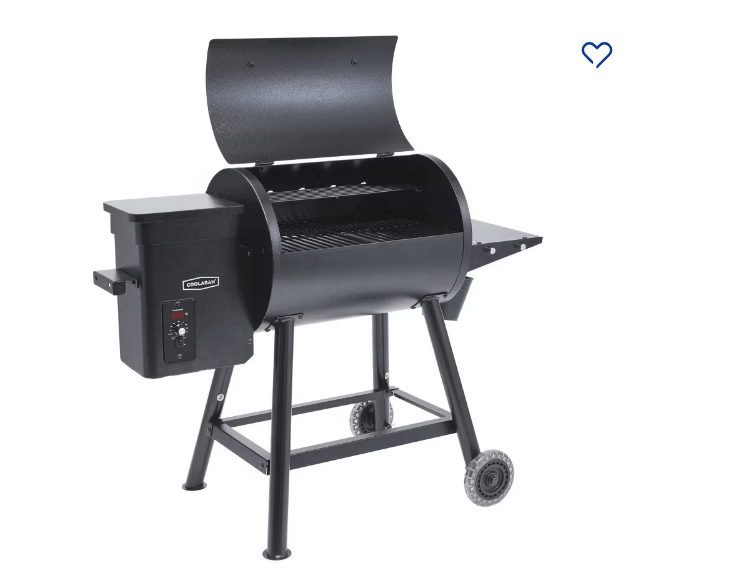
Saturday was given over to a quest. Somewhere out there in the Aldi Special Buys universe there exists an electric eight-in-one barbecue, steamer, smoker and, honestly, I’ve forgotten the other five things it does. Possibly it does your taxes. Possibly it walks the dog. All I know is that I hadn’t been able to get my hands on one, and I spent a good chunk of the day tracking one down. There’s a particular kind of determination that comes over a person when an appliance has been denied to them, and I had it in spades. Did I need a machine that does eight things? Probably not. Did I want one? With every fibre of my being.

In between appliance hunting, I had lunch with my brother and his two spawn, aged twelve and eleven. They’re at that lovely age where they’re still happy to sit with the grown-ups but are starting to be very much their own people, full of opinions and theories and stories that go on a bit. And then, somewhere between lunch and dessert, one of them said, quite plainly, that they don’t see me enough. I’m not ashamed to say it nearly undid me. Kids have a way of saying the truest thing in the room without any fuss at all, and then going back to their chips. I’m still thinking about it. I think I’ll be thinking about it for a while.

Then yesterday I flew home on Virgin, leaving Jo behind to be the good and useful one for the month. It was a lovely flight, smooth and on time, with the bonus entertainment of my seatmate, who was some sort of influencer. She spent the whole flight either making videos or meditating, switching between the two with impressive ease. Serene one minute, talking brightly into her phone the next.

Meanwhile, in the seat beside her, I was editing M/M erotica.

I have no idea whether she glanced over. I like to think that if she did, she simply added it to her meditation, breathed in, breathed out, and let it go. Either way, I hope I gave her something to think about between takes. It’s the least I could do.

And now I’m home. The cats have been informed. Judging by the looks I’m getting, they’re still considering whether to forgive me. The bull hasn’t noticed I was gone, which is either a compliment to the house-sitting arrangements or an insult to me, and I’m choosing not to find out which.

It’s good to be back. Now, about that barbecue.

— Suzy

Last of the Party People

Or: How We Farewelled the Spirit by Being Asleep for Most of It

There is a particular kind of person who boards an overnight ferry, finds the bar, and treats the whole of Bass Strait as a nightclub that happens to float. I have seen these people. I have admired them from a distance, the way you might admire a bird of paradise doing its little dance: with wonder, a touch of envy, and absolutely no intention of joining in.

Jo and I are not those people. Jo and I were in bed by half past eight.

I want that on the record because I suspect it will be used against us later, and I would rather confess it myself. Half past eight. The sun had barely finished setting. Somewhere above us, people were no doubt ordering their second drink and solving the world’s problems, and there we were, tucked in like a pair of Victorian invalids, having a lovely time.

It was, in our defence, a very good crossing. The Strait was on its best behaviour, which is not something you can say about it often, and the old girl rolled along so gently I barely noticed we were moving. Which brings me to the slightly sentimental bit, so bear with me.

This may well have been our last trip on Spirit One. With the new ships coming, the old Spirits’ days are numbered, and I found myself getting a bit misty about a boat. A boat! I have walked those carpeted corridors more times than I can count, usually hauling a bag that was too heavy and full of things I did not need, and there is a strange comfort in a place that never changes. The same slightly chilly cabin. The same hum of the engines coming up through the floor. The same announcement at some dark hour of the morning telling you, very cheerfully, to get up. I am sure the new ships will be shinier and better in every measurable way. But I will miss the old one, and I will not apologise for that.

There is one thing I will be lobbying for, should anyone at the shipyard be reading, and that is the showers. Please, I beg you, keep the showers. The Spirit’s showers have the kind of water pressure that can blow you clean across the bathroom if you step in unprepared, and I say that as someone who has stepped in unprepared. More than once. And when you turn the tap to hot, you get hot. Not lukewarm. Not the apologetic tepid dribble that most of the world’s plumbing seems to think is acceptable. Actual, honest, scalding hot. They are, without exaggeration, the most satisfying showers I have ever met, and yes, I said met, because a shower like that is less a fixture and more an acquaintance you look forward to seeing again. If the new ships come with some sad little eco-trickle, I will be writing a strongly worded letter. Possibly several.

So we said our goodbyes in the most fitting way we could think of, which was to sleep soundly through most of it. I like to think she would have wanted it that way.

Now we are on the road, and here is where the arithmetic gets humbling. From here to Queensland is roughly eighteen hours of driving. Eighteen. I have written entire chapters in less time. I suspect that before we reach the border I will have plotted several books, abandoned two of them, and developed strong opinions about every roadhouse sausage roll between here and there.

The plan is to stay with the aunt. Jo, being the better person of the two of us (this is widely acknowledged and I have stopped arguing), is staying on for the month to give her a hand. I, being the one with fifteen cats, a Highland bull, a lovesick sheep and several books that will not write themselves, fly home on Saturday. Jo will be doing genuinely useful and kind things for a whole month. I will be doing a few days of being fed and then leaving. We each play to our strengths.

I will say this for Jo: she has the patience of someone who has listened to me narrate an entire plot out loud across half the mainland and still agreed to get in the car with me. She does the perplexed little smile she saves for the weirdo creatives, nods in the right places, and occasionally asks a question so sensible it unravels a whole subplot. Every writer should have one. Mine is currently in charge of the snacks.

Back home, I am told, the menagerie is carrying on without me, which is both a relief and mildly offensive. I fully expect to arrive on Saturday to a round of pointed stares from the cats, who will want it known that the service in my absence was not up to standard.

But that is Saturday’s problem. Today’s problem is eighteen hours of bitumen, a car full of luggage that is somehow heavier than when we packed it, and the quiet satisfaction of being extremely well rested.

The party people may have had the better night. We, I suspect, will have the better morning.

More from the road soon, assuming I survive the sausage rolls.

Organised Chaos, Roughly Alphabetised

I want to open with a bold claim: I am kind of, sort of, organised. I’ll give you a moment to sit with that. I know. I had to sit with it too, and I still don’t fully trust it, the way you don’t fully trust a ladder even after you’ve tested the bottom rung.

Here is the evidence, presented in the order it occurred to me, which is to say no order at all.

We have business cards now. For the nook. Actual little rectangles of card with actual words on them, which I keep pulling out of my bag just to look at, the way you’d check on a sourdough starter. The nook itself exists — properly exists, not just as a plan taped to the fridge — and I am currently elbow-deep in inventorying the stock, which mostly involves me picking up a book, having a small feeling about it, and putting it down again in a different pile than the one I meant to put it in. Jo, meanwhile, is off making the bookish ephemera we’re going to sell alongside it, which is the kind of sentence I would have found deeply improbable a year ago and now just say out loud in the supermarket without blinking.

On the writing side of the ledger: the first eight books in the PHL universe are edited within an inch of their lives. I mean that literally — I think if I looked at Rookie Bloom one more time it would flinch. Now, ‘edited’ is doing some quiet lifting in that sentence — it means edited by me, by my sister, and by an editing program, three separate lines of defence, and still not yet handed over to the cousin, who reads a manuscript the way border security reads a suspicious suitcase. So there is still a very real chance those eight books come back from her with a million more changes, because nothing is truly finished until it’s survived being read through the eyes of a grammar nazi. Said with love. Enormous, terrified love. The artwork for all eight is done, which still feels like a magic trick every single time, because I am someone who once spent forty minutes deciding on a font and I have somehow produced eight finished covers without personally combusting. All the marketing artwork is done too, just sitting there patiently, waiting on delivery like a very well-behaved parcel.

What’s left in that pile is tax. Glorious, glamorous tax, going through every purchase from this whole endeavour and turning it into numbers a human accountant will one day squint at. I have not started this. I am telling you I have not started this the way you tell a doctor you’ve been meaning to get that thing looked at.

So: business, organised chaos. Genuinely. I’ll stand behind that description in a court of law.

Life outside the business and the authordom, however, remains a crime scene. Not a metaphorical one. An actual, if-you-opened-that-cupboard-you-would-need-a-lie-down one. I am aware of this. I am, very slowly, doing something about it, in the same spirit that you eat a large meal one bite at a time — mostly by ignoring the size of the plate.

The one bright, fully-assembled corner of that disaster zone is Canada. We now have all the clothes and ephemera we need for the trip, thermals included, which feels like an enormous adult achievement given that packing for cold weather usually defeats me entirely. It’s 71 days away now, which is either a very long time or no time at all, depending entirely on which pile of tax receipts I’m looking at when you ask me.

More soon — probably in a slightly different kind of chaos by then, knowing my luck.

Photo by Tima Miroshnichenko on Pexels.com

Eight Hours

A note before we start: this post is about sexual assault and the way we treat women who report it. If that’s not what you’ve got the stomach for today, I understand completely. Go and look at pictures of my chickens instead. I won’t be offended.

Eight hours.

That’s about how long it took. Victoria Police were called to a hotel in East Melbourne in the early hours of Monday morning, where the Sydney Swans were staying after a win that locked in a home final. By the time most of us had finished our first coffee, the story had already turned. Not into a question of what happened to a woman. Into a question of what kind of woman she is.

The photo was circulating. The innuendo was circulating. The words sex worker were being deployed the way people deploy them — not as a job description but as a verdict. Somebody had decided the salient fact wasn’t that a woman had walked into a police station and said the hardest sentence there is to say. The salient fact was that she was the wrong sort of woman to be saying it.

Eight hours. From complainant to punchline.

I’d like to tell you I was shocked. I wasn’t. I don’t think a single woman I know was shocked. That’s the part I keep chewing on, actually — not the outrage but the complete absence of surprise. We watched it happen with the resigned expertise of people who’ve seen the film before and know exactly which scene is coming next. Here’s the photo. Here come the theories about what she was after. Here comes the bloke in the comments explaining that women lie about this all the time, a thing he has never once bothered to check but feels in his bones. Here comes the concerned discussion about these young men and their careers, their futures, their tragic proximity to consequences.

And here — right on cue — comes the line that made me want to put my boot through the screen.

Men in a position of power should be given the benefit of the doubt.

Let’s take that one apart, because it deserves it.

The presumption of innocence is a real thing and a good thing and I’ll defend it until I’m hoarse. It belongs in a courtroom. It means the state has to prove its case against you before it can take your liberty. It is a shield held up between a citizen and the enormous crushing weight of the government, and it exists precisely because that weight is enormous and crushing.

It has never meant she is presumed to be lying. Those are not the same statement. They are not even in the same postcode. You can hold the position that these men have not been charged with anything and are entitled to due process — which is true, and which I hold — without also circulating a photograph of a woman and inviting the internet to appraise her. One of those is a legal principle. The other is a sport.

And the power part. The benefit of the doubt is supposed to run toward the person with less protection, not more. These are men with a football club, a league, a media department, a players’ association, lawyers on retainer and a nation of supporters who have loved them since they were teenagers. She has none of that. She has whatever’s left of her privacy and a phone that won’t stop going off. To look at that arrangement and conclude that the men are the ones in need of a bit of extra grace is not a moral position. It’s a fan reflex wearing a suit.

Meanwhile the actual institutional emergency, as far as I can tell, was that the All-Australian squad announcement had to be pushed back a week.

Here’s the bit I’ve been avoiding saying, so I’ll just say it.

If it were me, I don’t know that I’d come forward.

I’ve turned that over for two days and I can’t make it come out any other way. Knowing what I know, having watched this exact thing happen to this exact kind of woman over and over since I was young enough to think it would surely be different by the time I was old — no. I don’t think I’d pick up the phone. I think I’d go home, and have a shower I’d remember for the rest of my life, and tell nobody, and carry it.

That is what all of this is for. That’s the function. It isn’t a side effect of the noise, it’s the point of the noise. Every woman watching this week has been handed a very clear piece of instruction about what happens to women who speak, and she’s been handed it for free, in eight hours, without anyone having to say a word to her directly.

And I keep coming back to the count.

Sherele Moody keeps a ledger of Australian women and children killed by violence, because no government in this country has decided that’s their job. Thirty-seven women this year, and we were only in July when I last looked. Seventy-nine last year. More than thirteen hundred since 2000. She is one woman with a spreadsheet doing the work a nation won’t do, and she was also one of the voices this week saying plainly that what’s being done to this woman online is victim blaming and it is malicious.

We are told this is a crisis. It got called a national emergency from a podium in 2024. And then a woman reports an assault and within a working day the country’s instinct is to work out what she was wearing, what she does for a living, and what she stood to gain.

Now, someone will pop up here and tell me I’m conflating two different things. Domestic violence over there. Sexual assault over here. Different crimes, different causes, different fixes, stop muddying the water, love.

And they’re not entirely wrong. They are different, and the difference matters.

Domestic violence is a siege. It’s slow. It’s conducted by a man who knows your mother’s birthday and where you keep the spare key and exactly which sentence will land hardest, because he’s been taking notes for years. It doesn’t announce itself with a single terrible night; it arrives by degrees, in the shape of a rule, then another rule, until one day you realise you’ve redesigned your entire personality around not setting him off and you can’t remember when you started. Sexual assault can be one night. One person. Sometimes a stranger, more often not. A single act that reaches back and rewrites everything behind it and forward and rewrites everything ahead.

Different mechanisms. Different escape routes, if there are any. Different lies told, to others and to yourself.

They’re also exactly the same thing, and I’ll die on that hill.

Both of them come down to a man deciding that a woman’s no is a formality. A negotiating position. Something to be worked around, waited out, or simply ignored, because in that moment he has decided that what he wants is more real than what she wants. And both of them do it in the most personal place there is. Not your car. Not your wallet. Not a punch thrown in a pub car park in front of witnesses who’ll back you up. Your body. Your bed. Your own house, or a hotel room you can never un-know. The place you can’t lock the door on, ever, because you have to live in it for the rest of your life.

And then — this is the bit that seals it — the aftermath is word for word identical. Why didn’t she leave. Why did she go up to the room. Those are the same sentence in different outfits. What did she think was going to happen. What was she after. She’s got a history, you know. She’s not exactly a saint. Same script, same lighting, same audience nodding along. You could run the DV comments and the assault comments through a machine and it couldn’t tell you which was which.

That’s why the death toll belongs in a post about a hotel room. It’s not a digression. It’s the same road, further along.

You cannot fix the killing while the culture is still like this. They’re the same thing at different volumes. The bloke who thinks she’s probably lying and the bloke who thinks she’s probably his are drinking in the same pub. Every joke, every photo passed around, every well, we don’t know the full story deployed as a shrug rather than as genuine caution — it all goes into the same account, and women pay the interest.

Which brings me to the thing I’ve never worked out.

How do women still trust men at all?

Not rhetorically. I actually don’t understand it. We know the numbers. We watched this week happen. And yet we get into taxis and we go on second dates and we fall in love and we marry them and we have sons and we hand over our whole soft undefended lives on the assumption that this one, at least, is safe. Every day, millions of us, on credit, with no collateral and a truly appalling claims history.

I think it might be the bravest thing people routinely do and nobody’s ever called it courage. It gets called normal. It gets called love, or being sensible, or don’t be so dramatic.

There are good men. There are wonderful men — I know some, I’m related to some, I write entire books about the imaginary ones. That’s not the point and it never was. The point is that the trust is a gift, extended constantly, at enormous risk, and the very least the recipients could do is spend a week not demonstrating exactly why it’s a bad bet.

So how many? That’s my honest question and I don’t have a clever ending for it. How many have to die before shit actually changes. Thirteen hundred wasn’t enough. Seventy-nine in a year wasn’t enough. A national emergency declared on television wasn’t enough to stop a woman being turned into content before breakfast.

I don’t know what happened in that hotel. Neither do you. Neither does anyone with a keyboard and an opinion, and it’s not our job to know — it’s the police’s job, and then a court’s, and both of those should be allowed to do it properly.

But I know exactly what happened afterwards. We all watched that part live.


If any of this has landed close to home for you: 1800RESPECT (1800 737 732) is there, all day, every day.

A Research Trip. It Is A Research Trip. I Am Going To Keep Saying That.

Right. So I mentioned in the last post that something specific was coming, and that it explained the thermal underwear, and that I’d tell you about it properly another time.

This is another time.

We’re going to Canada.

We leave on the 30th of November. And before anyone gets excited on my behalf, I want to be very clear about the nature of this undertaking: it is a research trip. Wholly and entirely undertaken in support of my writing. There is no other reason. I have thought about it from several angles and I am confident this framing holds.

Here is the itinerary. You may draw your own conclusions and I would ask that you keep them to yourself.


November 30. We leave. Out of home and up to Sydney first, because you cannot simply leave from here. Nothing simply leaves from here. Getting off this island is a process with stages.

Then Auckland, and from Auckland to Vancouver, across an ocean that I have looked at on a map several times now and which does not get smaller no matter how long I stare.

And we arrive on November 30. The same November 30. We cross the international date line and it hands the day back to us like we’d left it on the counter. I have had this explained to me. I have nodded along. I have subsequently tried to explain it to someone else and heard my own voice tail off halfway through. I am simply going to get on the plane and let it happen to me.

Eight days on the ground. Which sounds generous until you see what we’ve done with them.


Because here is the actual shape of it.

We land in Vancouver. Then we get in a car and drive to Edmonton — which, for the locals playing along, is not a little jaunt. It is a proper day of driving. In December. In Canada.

We’re driving to Edmonton to watch the Washington Capitals play the Oilers on the 3rd.

Now, I want to be clear that I have credentials here. I have done Brisbane to Geelong to catch the Spirit — nineteen hours, one stage, no sensible stopping — and I have done it twelve times, which I think we can all agree is eleven times more than any reasonable person would. So I’m not frightened of a long drive. Long drives and I have an understanding.

But every single one of those nineteen-hour runs, the only chill involved was the air conditioning set to nipsicle. That’s my entire experience of being cold in a car: self-inflicted, reversible, and available at the touch of a dial. I have never once driven through weather that was trying to kill me. I suspect there is a meaningful difference between “big” and “big and also frozen“, and I am about to learn it personally, in the dark, somewhere in Alberta.

The next morning we get back in the car and go four hours to Calgary, where on the 5th we watch the Capitals play the Flames — in the Saddledome, in its final year. That one matters to me more than I expected it to. Buildings like that don’t get replaced, they get succeeded, and there’s a particular ache in walking into a place while you still can. I fully intend to be embarrassing about it.

And then another full day’s drive back to Vancouver, where on the 7th — and you will never guess this — we watch the Capitals play the Canucks.

The day after that, we fly home.


So to summarise: I am flying roughly as far as it is possible to fly, in order to sit in three different buildings in three different cities across five days and watch the same team play hockey, with two enormous drives wedged in between, and then I am immediately coming home again.

Research.

I write hockey romance. I have written a great deal of hockey romance. And I want to put something on the record here, plainly, because it is the single most damning sentence in this entire post:

I have never once set foot inside a hockey arena.

Not once. Never. I have written arenas I have never stood in. Road trips I have never taken. Rooms I have never smelled. The specific quality of cold that comes off the ice and settles on your forearms — I have described that with enormous confidence on the basis of absolutely nothing but video footage and the reports of kinder, better-travelled people.

At some point a person has to go and check.

That’s my story. I’m sticking to it. My accountant may have questions and I am prepared for them.


The other thing — the real thing, if I’m honest — is who I’m doing it with.

Karen is American, and she and I have been at this together since somewhere around 1998. That’s not a typo. That is longer than some of you have been alive, and it is certainly longer than any sensible person maintains a correspondence about imaginary people.

She has been through forty-eight of my novels. Forty-eight. Forty-five of which have never seen daylight outside my own very small circle — which is to say, outside Karen and Jo. There are manuscripts on my hard drive that only two other human beings on this planet have ever read, and both of those human beings will be in the car with me in December.

There are days I’m not entirely convinced Karen and I aren’t operating on the same brain with a very bad connection between the halves.

And in all those years we have conducted the entire relationship across a time difference that has never once been convenient for either of us. In December we will be in the same country. The same car. The same building. At the same time.

The plan — and I use that word loosely — is that in the down times we’ll get some words down. Between drives. In the evenings. In airports.

I want to be honest with you about how likely that is.

We will write. We will absolutely write. What we will not do is make words. There’s a difference, and if you’re one of us you already know it: making words is the part where you sit down and put sentences in a document and it is work. Making stories is the other thing. It’s two people in a car for eleven hours going but what if he doesn’t tell her and no, wait, go back, what if it’s the brother and building an entire cathedral of plot out loud that neither of you writes down, and both of you remember perfectly two years later.

We’re going to come home with a folder containing one paragraph and a list of things we’re definitely going to write about later. And it will have been the most productive trip of my life.

And Jo is coming with us — I’ve just realised I hadn’t mentioned that — which means there will be a third person in that car, listening to two grown women argue passionately about the motivations of people who do not exist. She’ll smile in that way she does. The perplexed one. The one that says I love you both and I have no idea what is happening here. Jo has read the forty-five too, mind you. She knows exactly who we’re arguing about. She simply retains the ability to be normal about it, which is a gift neither Karen nor I have ever possessed.

We’re bringing the laptops. On principle.


The cats, meanwhile, will be furious. Fifteen of them, abandoned in the run-up to Christmas, with no regard for their feelings. In my defence there is a shed out the back containing over a thousand cans of cat food, which in hindsight makes the August boat trip look less like an unhinged errand and more like strategic forward planning.

I’d like that noted too.

Where I’ve Been (Or: One Boat, Six Days, And Twelve Hundred And Forty Cans Of Cat Food)

Hello. Yes. I’m still here. I know it’s been quiet — a fortnight of quiet, in fact, which I’m told is long enough for people to start wondering. In my defence I wasn’t gone the whole time. I was gone Saturday to Thursday. The rest of the silence was just me, here, not writing anything down.

I’d love to tell you I’ve been off doing something glamorous. A writing retreat, perhaps, in a stone cottage with a view and someone bringing me coffee at respectable intervals. A research trip. A festival. Something with a lanyard.

No.

I went to Victoria to buy cat food.

I want to sit with that for a moment, because I think it deserves your full attention. I crossed Bass Strait. On a boat. Like a person with purpose. And the purpose was tinned meat.

Now, in my defence — and I would like the record to show that I have a defence, and that this time it comes with numbers — there are fifteen cats living at this stationhouse. Fifteen. That is not a household, that is a small municipality with opinions. Add to that the chickens, the ducks, the geese, and the guinea fowl (who I remain convinced are simply feathered alarm systems that occasionally lay), and what you have is less a home and more a fully operational feeding regime with a writer attached to it.

Buying for that lot in the ordinary way — a few tins here, a few tins there, whatever the local shelf has decided to stock this fortnight — is a slow bleed. It’s the kind of expense you don’t notice until you look at it properly, and then you sit down for a bit. So somebody said we should just do a big run, and somebody else agreed, and neither of us stopped to ask whether “a big run” ought to involve a vessel with a car deck.

Reader, we booked the boat. My sister came with me, and we took two cars. That should tell you everything about the scale of ambition at play here — we did not go over there hoping to fit things in. We went over there with capacity.

I’d forgotten what the crossing is like. There is a particular kind of person who sleeps beautifully on the Spirit and I am not that person. I lay there in the dark listening to the hull doing its thing and thought about the fifteen cats at home, presumably staging a coup, and the poultry, presumably fine, because poultry are always fine. Then Devonport again on the way back and that first proper look at the Tiers, which is the moment I always know I’m home, no matter how far I’ve been or how ridiculous the errand.

Now. The arithmetic. Because I know some of you are already composing a very gentle comment about how this cannot possibly have been worth it, and I would like to get in first.

One ferry crossing. Four nights’ accommodation. Twelve hundred and forty cans of cat food and forty bags of litter.

And after the entire cost of getting there and back and sleeping in between had been taken off the top — the boat, the beds, the lot — we were still one thousand six hundred and eighty-seven dollars ahead.

One thousand six hundred and eighty-seven dollars. I have read that figure many times now and it has not stopped being funny. I did not go on a holiday. I went on a procurement operation, and it paid for itself and then handed me change.

And then, having established that we were already there and already had two cars and had frankly stopped being sensible several days earlier, we went to Costco.

I don’t want to talk about Costco at length because I’m not sure I can do it justice, but I will say this: I came home with six months’ worth of baking ingredients. Six months. Flour, sugar, the lot. I have never in my life been six months ahead on anything, including deadlines, and yet here I am, structurally prepared to bake through whatever comes.

I also came home with forty-eight rolls of toilet paper for fifteen dollars.

Fifteen dollars. Forty-eight rolls. I showed our housemate when we got home and she made a noise I can only describe as reverent. There is a stack of it in this house that you can see from the hallway and I am not moving it, because I want to look at it.

We also, while we were over there and clearly beyond saving, bought clothes. Warm ones. Properly warm ones — coats and thermals and the sort of fleecy unmentionables that a person does not buy in Tasmania in August unless something specific is coming.

Something specific is coming. We’re going to Canada in December.

I’ll write about that properly another time, because it deserves its own post and because I suspect if I start now I won’t stop. But it does mean that a not insignificant portion of a car that was supposed to be full of cat food ended up full of thermal underwear instead, and I regret nothing.

And then — because apparently we hadn’t yet located the bottom of this particular barrel — we went to IKEA.

For flatpack furniture. Because who doesn’t love a good flatpack.

I want to be very clear that I typed that sentence with a completely straight face and it is a lie in every meaningful sense. Nobody loves a flatpack. Flatpack is a thing you agree to at a distance, in a warehouse, in a good mood, and then live to regret in a hallway at nine o’clock at night surrounded by dowels while somebody reads step fourteen out loud in an increasingly clipped voice. I know this. I have known this for years. I bought it anyway. There are boxes in this house now, waiting patiently, and we both know how that ends.

Both cars came home riding low. And I mean low. There was a moment on the ramp where I did some quiet mental sums about weight limits and decided, in the great tradition of this household, not to think about it further.

I should have thought about it further.

One of the cars — the one carrying the bulk of the cat food, because of course it was — got stuck on the ramp coming off the boat. Grounded. Immovable. Sitting there with a queue of vehicles behind it and me in the driver’s seat performing the internationally recognised sequence of Trying It Again But More Confidently.

A stevedore came and got it off for us.

He did not laugh at me. I want that on the record, because he had every right to and he did not. He simply assessed the situation with the calm of a man who has seen many things come off many boats, got in, did whatever it is they do, and delivered my car and its enormous cargo of cat food safely onto Tasmanian soil. Then he handed the keys back and said something kind about how full it was.

Sir, if you’re reading this — and you are almost certainly not — you handled that with more grace than I did, and I have thought about you several times since.

Here’s the part that got me, though.

I was gone from Saturday to Thursday. Six days of not being sat on while I try to write, not being woken at ten past four by a cat with a theory, not having to check every chair before I sit in it. And I came through the door expecting — I don’t know. Something. A greeting. A parade. Some acknowledgement that the woman who crossed an entire strait on their behalf had returned.

They looked at me.

That was it. A brief and unimpressed survey of my person, an assessment that I had not brought anything of immediate interest into the room, and then a return to whatever they’d been doing. One of them yawned. I want you to understand that I saw it happen and I have not recovered.

Then, of course, the cartons started coming in, and suddenly I was the most beloved woman in the southern hemisphere. Fifteen cats materialised from fifteen separate hiding places like they’d been summoned. Absolute devotion. Total loyalty. Deep, abiding love — for approximately as long as it took to open the first can.

So that’s where I’ve been. Not writing. Not particularly resting. Just moving an enormous quantity of tinned meat, kitty litter, flour and unassembled Swedish furniture across a body of water, because I have made a series of life choices and this is where they’ve deposited me.

Normal service resumes now. There are words waiting, and a manuscript that has been sitting quietly with its hands folded, being very patient with me.

And somewhere out in the shed, enough cat food, litter, flour and toilet paper to see out a modest siege — with an allen key on standby, in case the siege gets boring.

Research. It’s Called Research.

Well. We’re going to Canada.

November 30th to December 8th, if you want the specifics, and I can tell you exactly what we’ll be doing with that time: watching the Washington Capitals play three games. Edmonton. Calgary. Vancouver. In that order. In December. In Canada.

Now, before anyone says anything, I want to be very clear about something.

This is research.

I am a working author. I write hockey romance under the Bella Bruce name — an entire fictional league, the Portland Pioneers, a whole universe of men who are enormous and emotionally constipated and skate very fast. You cannot write that convincingly from a stationhouse in rural Tasmania on the strength of YouTube highlights and vibes alone. At some point, a serious professional has to go and stand in the building. Feel the cold come off the ice. Hear what twenty thousand people sound like when the puck goes in. Learn what the air smells like at a rink in an actual hockey country in actual winter.

That’s not a holiday. That’s fieldwork. I’ll be taking notes. There will be notes.

(Jo has been very supportive about the notes. Jo has also been laughing at me for approximately three weeks. Both things can be true.)

Why now

Because Ovi re-signed.

For those of you who don’t follow hockey and are only here for the cats and the kitchen renovation: Alex Ovechkin is the Washington Capitals’ captain, the greatest goal scorer the sport has ever produced, and — at the time of writing — a man of forty who has just put pen to paper for a twenty-second season with the only club he’s ever played for. He’d left it late. There was a genuine possibility he’d simply walk away, and honestly, nobody would have blamed him.

He didn’t. He signed. “I’m back!” he said, which is exactly the correct number of words.

And the moment that news landed, we looked at each other and said: right. Now. It’s now or it’s never. Because the thing about watching a legend play out the last of it is that there’s no schedule for when the last of it arrives. You don’t get a warning. You get one more year, maybe, and then one day you’re reading a retirement announcement and thinking I always meant to go.

I have too many of those already. I wasn’t collecting another one.

The plan

Three games, three cities, nine days, and a schedule that is — I’ll be honest with you — mildly deranged. The Caps are on a long western road swing through that stretch, and we’ve essentially chosen to become barnacles on the hull of it. Edmonton, then Calgary, then Vancouver on the 7th, and then home.

Now about Snow…

And now I have to tell you something a little embarrassing, which is that neither of us has ever seen snow.

I mean properly seen it. Seen it falling and staying. Seen it sitting on things — on a fence post, on a car roof, on a branch — being snow, in the way it does in every Christmas film ever made.

We’ve seen the miniscule flurries you get here occasionally, the kind that come down looking very promising and then vanish the instant the sun clears the hill, like they’ve remembered an urgent appointment elsewhere. And I once saw snow in Oregon, in spring, which I’d been quite excited about until I got close enough to establish that it was really more ice than snow — a sort of grey, granular, week-old business that had clearly given up on being beautiful some time ago.

That’s it. That’s the whole of my snow experience. Forty-odd years on this earth and I have never once stood in falling snow.

So somewhere in Edmonton or Calgary — and everyone assures me it’s a fairly safe bet in December — there is a very strong chance that two grown Tasmanian women are going to stop dead in the middle of a footpath, in the way of everybody, and simply stare upward with their mouths open like a pair of absolute tourists.

I’m not going to apologise for it. I’ve been waiting a long time. If you’re Canadian and you see us doing it, please just go around.

I am also told that Edmonton in early December is not cold in the way that we understand cold. Tasmanian cold is a damp, complaining sort of cold that gets into your knees. Edmonton cold, from what I gather, is a cold with opinions. A cold that takes an interest in you personally. We’re buying proper coats — real ones, not the optimistic Tasmanian approximation of a winter coat — and this has been budgeted for. It’s a business expense, obviously, because it’s research.

And the history

Because it can’t only be hockey — even I have limits, and Jo has conditions — we’re building the rest of the trip around actually seeing where we are. Museums. Old buildings. The bits of a country that tell you how it got to be the way it is. I’m the woman who once climbed a hill in New Zealand to stand where a film set used to be, so you already know I’m not going to be in Alberta and not go looking for what’s underneath it.

There’ll be a fair bit of that. There’ll be photographs. Given my track record with a certain tour group and twelve thousand photos of a fictional village, you should probably brace yourselves.

The honest bit

Here’s the truth of it, under all the joking about research.

I’ve been writing about this sport for years. I’ve built a league, filled it with players, given them lines and rivalries and terrible haircuts and love stories. And in all that time I’ve never once sat in a rink in the country that invented the thing and watched it happen in front of me.

That’s a gap. Not a fatal one — you can write around a gap — but I’ve always known it was there, sitting in the back of my head every time I described the sound of a body hitting the boards and had to imagine it.

So yes, it’s research. It’s genuinely research. It’s also nine days with my favourite person, in a country neither of us has seen, watching a forty-year-old Russian do the thing he’s better at than anyone who has ever lived, while there’s still time to watch him do it.

And somewhere in the middle of it, if the weather is kind — and by kind I mean appropriately unkind — I’m going to stand outside in a proper coat and watch snow come down and settle on things, for the first time in my life, at the age of far-too-old-to-be-this-excited.

Some research you have to go and get in person.

See you in December. I’ll bring back notes. And photos. So many photos.

— Suzy

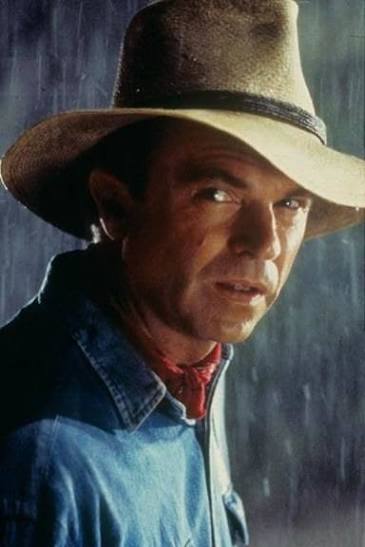
The Closest I Ever Got to Sam Neill

Vale Sam.

Sam Neill has died, and I find myself unexpectedly wanting to sit down and tell you all a story.

He gave us so many good films over the years — more than I could possibly list, and every one of you will have your own favourite tucked away somewhere. Jurassic Park, obviously. The Piano. Hunt for the Wilderpeople. That particular brand of dry, watchful, slightly rumpled charm he brought to everything, where you always got the sense he found the whole business of being a film star faintly ridiculous and was quietly enjoying the joke. I liked him enormously, in the way you like someone you’ve never met but have watched be excellent for forty years.

But my best memory of the man isn’t from a screen at all. It’s from a paddock in New Zealand, and it remains, to this day, one of the funniest things I have ever witnessed with my own two eyes.

Let me set the scene for you.

Some years back I was on a Lord of the Rings tour through New Zealand. Now, I want to be clear about the calibre of people I was travelling with, because it matters enormously to what follows. We were not casual fans. We were not there to nod politely at a nice view, buy a fridge magnet, and be back at the hotel in time for the buffet. This was a fully immersive pilgrimage, and it was run like one.

The days were long. We’d often be up and moving before sunrise and still going late into the night, chasing the light, chasing the locations, chasing the exact spot where a thing had happened in a film that, to us, had rather more authority than most historical records. And here is the detail I really need you to sit with: a good number of my fellow travellers would set their alarms an hour earlier than they strictly had to — sacrificing sleep they desperately needed — purely so they could don their ears and their wigs, strap on their fake feet, and assemble each individual, painstakingly recreated piece of costuming, so that they might walk the paths of their chosen race properly attired. Not for a photo. Not for a laugh. For the integrity of the experience.

That was the calibre of devotion on that coach.

And it wasn’t only the dressing-up, either. This was a serious tour — run by Red Carpet Tours, in fact, and this same crew, plus or minus a few faces, has now done the whole pilgrimage twice — and it opened serious doors. We had lunch with the producers. We sat in on classes with the make-up artists who’d done the real thing. Weta Workshop opened their doors to us and let us stand among the actual artistry of it all. We were, in short, known. We were followed around by newspapers — and yes, I’m dating myself here, but this was back when newspapers were printed on paper and a photographer would trail a busload of costumed adults across the countryside because it made for a genuinely good story.

And speaking of photographs: when our group of twenty-five descended on Hobbiton, we came away with over twelve thousand photos between us. Twelve thousand. From one visit. To one location. We used to joke that no tour group on earth had ever documented a patch of ground so thoroughly — that entire professional survey teams had mapped smaller areas with fewer images. Every door of every hobbit hole. Every cabbage. Every artfully placed tiny wheelbarrow. If it existed in the Shire, we have it archived in triplicate from four angles.

Now, I’ll be honest with you: not every one of us was quite that far gone. There were some of us — and I count myself gently among this number — who were deeply, sincerely committed to the books and the films, but who had perhaps not crossed fully into the fake-feet-before-dawn tier of devotion. (And I mean that in the nicest possible way. I have nothing but love and admiration for the pre-sunrise wig people. I simply also enjoy sleep.) But committed tragics, one and all. That’s the important part. Whether we were in full regalia or merely in spirit, we took our roles seriously. Possibly too seriously. Definitely too seriously.

And lest you think I’m exaggerating the depth of it for comic effect — I’m really not. Here is the proof of the pudding: two of our bravest of men, the very fellows who served as our tour’s own Boromir and Aragorn, now work for Weta as weaponsmiths. Actual weaponsmiths. Forging the actual blades. And two of our hobbits went on to join Weta as costume experts. Four of the people on that coach were so genuinely, unshakeably good at this that the wizards behind the curtain took one look and hired them. So when I tell you we were a serious bunch, please understand I am not being cute about it. We were a pipeline.

So there we were, early one particular morning, being told with a certain amount of ceremony by our lovely guide that this afternoon we’d be making a special stop at Sam Neill’s favourite café. Not far, apparently, from his winery. There was a pause, clearly designed for a ripple of excited murmuring to pass through the coach.

The ripple did not come.

We took this news entirely in our stride and carried on regardless, because — and I say this with the greatest affection and no small amount of shame — poor Sam meant very little to a coachful of Tolkien obsessives. We had bigger fish to fry. We had Rohan to think about. This was a group that would rise before dawn to correctly attach a pair of pointed ears; a café patronised by a knighted New Zealand screen legend simply could not compete, in that moment, with the promise of another paddock that had once, briefly, in a certain light, been Middle-earth.

I’m not proud of it. But I’m not going to lie to you either.

When we finally arrived, the group split neatly in two. Some of us descended on the café like a clan of hobbits who’d caught the scent of second breakfast and would not be stopped by man nor Nazgûl. And a few of us — myself included — stayed behind on the coach.

Now, in my defence, I had earned that rest. We all had. It had been a big day. We had made the climb up to the site of the Golden Hall — where Éowyn stands watching the riders return to Rohan — and stood at the top waving the very flag the Fellowship carried, the wind doing its level best to tear it out of our hands. And here is the part that still makes me laugh: I found that climb genuinely difficult in ordinary human shoes, with ankles and arch support and all the advantages of modern footwear. The hobbits did it in silicone hairy feet. Silicone hairy feet. Up a steep, windswept hillside. And they did it without complaint, because to complain would have been to break character, and one does not break character on the paths of one’s chosen race. I have never simultaneously respected and worried about a group of people more.

We had also recreated the Charge of the Rohirrim across a hillside with more commitment than dignity. And we had spent a genuinely alarming amount of time on our hands and knees searching for Pippin’s Elven brooch, which one of our number had dropped and which had assumed, in our collective imagination, the significance of an actual plot point. We were spent. Emotionally, physically, spiritually. We slumped in our coach seats like the survivors of a great battle, which, in our heads, we absolutely were.

Little did we know that we — the exhausted, the seated, the ones who couldn’t be bothered — were about to receive the revelation of the entire tour.

Because as we sat there, a battered old SUV pulled up a little way off from the coaches. Nothing flash. The sort of car a man drives when he has nothing to prove to anybody and a winery to get back to. And out of it climbed a man.

I will never know precisely what tipped him off. I’ve turned it over many times since, and I like to imagine it unfolded slowly, the way dread always does in the films he was so good in.

Perhaps it was the fellow in full Boromir regalia, sword and all, slurping contentedly on a vanilla latte outside the café. Perhaps it was the Elven princess serenely demolishing a vanilla slice, crumbs cascading down her ethereal robes. But more likely — almost certainly — it was the three ginger hobbits who chose that exact moment to come clomping merrily out of his favourite café on their great fake hairy feet, chattering away, utterly at home.

Whatever it was, I watched it land.

The man went still. He slowly reached up and took off his glasses. And his eyes went wide — and I need you to understand that this was not a general sort of wide. This was specific. This was, to the millimetre, the exact expression Dr Alan Grant wears when he first stands up in that jeep and claps eyes on the dinosaurs. That pure, silent, slack-jawed awe. That “we’re going to make a fortune with this place” face. Except in reverse. Except the wonder was horror, and the dinosaurs were us.

And then, without a single word, Sam Neill — knight of the realm, national treasure, the man whose café this was — gently sank back down into his battered SUV, quietly closed the door, and reversed out of there in a magnificent cloud of gravel dust. Gone. Vanished. Fled his own regular haunt rather than face a busload of feral Tolkien enthusiasts eating pastries in cosplay.

I have never respected a man’s survival instincts more.

That was the closest I ever got to Sam Neill. Not a handshake. Not an autograph. Not even a hello. Just the fleeting, unforgettable privilege of watching a genuine legend decide, in real time, that whatever was happening at his café today was Not For Him — and remove himself from it with the speed and decisiveness of a man who has clearly outrun a velociraptor before and knows exactly how these things go.

And do you know what? I wouldn’t trade it. A handshake, I’d have forgotten. That, I have dined out on for years.

Rest easy, Sam. Thank you for the films, thank you for the wine you probably poured extra generously the moment you got home that afternoon, and thank you — most of all — for the retreat. You clocked the situation, you made the right call, and you got out clean.

Life, uh, finds a way. 🍷